(Originally written and posted on facebook, 16/11/26, by J. Lowe)
I have been following the story of the attack on Dr Helen Haines on 19/10/26 in Wangaratta (Australia) closely.
(I even subscribed to News Corpse . Article details below.* (This particular article is worth reading).
People around the world have sought to use this attack for their own nefarious reasons, eg. did you KNOW that David Shoebridge followed (follows?) Nugent on X?
This is sarcasm by the way. (It seems that one’s intentions need to be spelled out in these times of online hysteria).
They say the attack was the result of a left extremist conspiracy. About men hating women. About terrorism. Or because… he was “a schizophrenic”. Etcetera.
Advertisement
Meanwhile, Meta laughs all the way to the bank as the outrage creates yet more engagement.
In my humble opinion, the underlying tragedy (apart from Haines’ terrible injuries) is that it is completely fine for people in our society to be left to live alone, in Nugent’s case for 10 years, suffering from all kinds of conditions.
In our society, privacy and individuality still are more important than connection. In other cultures this would never have happened. We need to learn from these cultures.
*I am NOT saying that his family, neighbours etc. are to blame.*
This is just an observation about what can happen when people are left alone with their computers as false friends, away from real human connection. Harm to others and self.
This needs to change. Feel free to discuss.
This is not an “airy fairy” idea. Here is a link to a long term, ongoing study, that is showing that connection is the No. 1 factor that determines our quality of life: https://news.harvard.edu/…/over-nearly-80-years…/
Article text: ‘ Brendan Nugent held delusions of being persecuted and was most likely in a state of psychosis when he allegedly attacked Helen Haines according an early prison assessment by authorities. But there are no signs to date that he was influenced by extremism, the ABC reports, although investigators had not ruled out a personal grievance. He appeared before Wangaratta Magistrates’ Court on 21 October, where no plea was entered. According to the ABC report, a source said the initial Victorian prisons assessment suggested that he had a “significant mental health disorder” and schizophrenia was being explored as an possibility. “So far nothing is indicating extremism,” the source said. “There’s no group, no ideology, no intention.” While media reports had focused on his social media postings on Israel, Gaza, climate change and pedophile Jeffrey Epstein there was nothing to link these views to the incident to date. “His posts online are like symptoms of an illness getting worse. When someone’s mental health is sliding, the conspiracy thinking gets louder and more frantic,” the source said. “Persecutory beliefs are the most common kind of delusion, and they often latch onto whatever in the news. So you see Ukraine and the CIA turning up alongside fears about his own safety.” However, given Ms Haines was a long-term friend of Mr Nugent’s stepmother, a personal grievance had not been ruled out. “She’d been a friend of his family for more than 20 years, and she was his local member. That’s not a random choice. “When paranoia takes hold, it usually pulls in the people around you,” the source said. … Victoria Police Chief Commissioner Mike Bush previously said there was no intelligence against Mr Nugent prior to the alleged deliberate attack. “We had no intelligence holdings against this 43-year-old individual, and there was nothing known to us that would have arisen or piqued our interest or given any indication that he was an immediate threat,” he said. … Australian Federal Police Commissioner Krissy Barrett also said her agency had no dealings with the accused. However, she said teams were “charging almost one individual every week for targeting Commonwealth parliamentarians or high office holders”. “It is one of our biggest parts of the business, and we have extensive resources dedicated to that work. That includes our national security investigations team,” she said. “We are not only charging offenders where they have committed offences, but we are also intervening early where we see escalating or concerning behaviour.” Victorian Premier Ben Carroll said the alleged attack on Dr Haines “calls for some soul searching”. “Online propaganda is turning neighbour against neighbour. And it’s bloody frightening,” he said. “I’m not saying everyone should agree on everything … we must all be free to speak our minds. But that freedom comes with obligations: respect for the law, respect for each other, respect for leaders, respect generally.” ‘
Article for the Dunoon Gazette, published February 2025.
Muso Interview: Julia Stewart and Peter Corlis, bellringers, photos and text by J. Lowe, edited by J. Stewart, P. Corlis
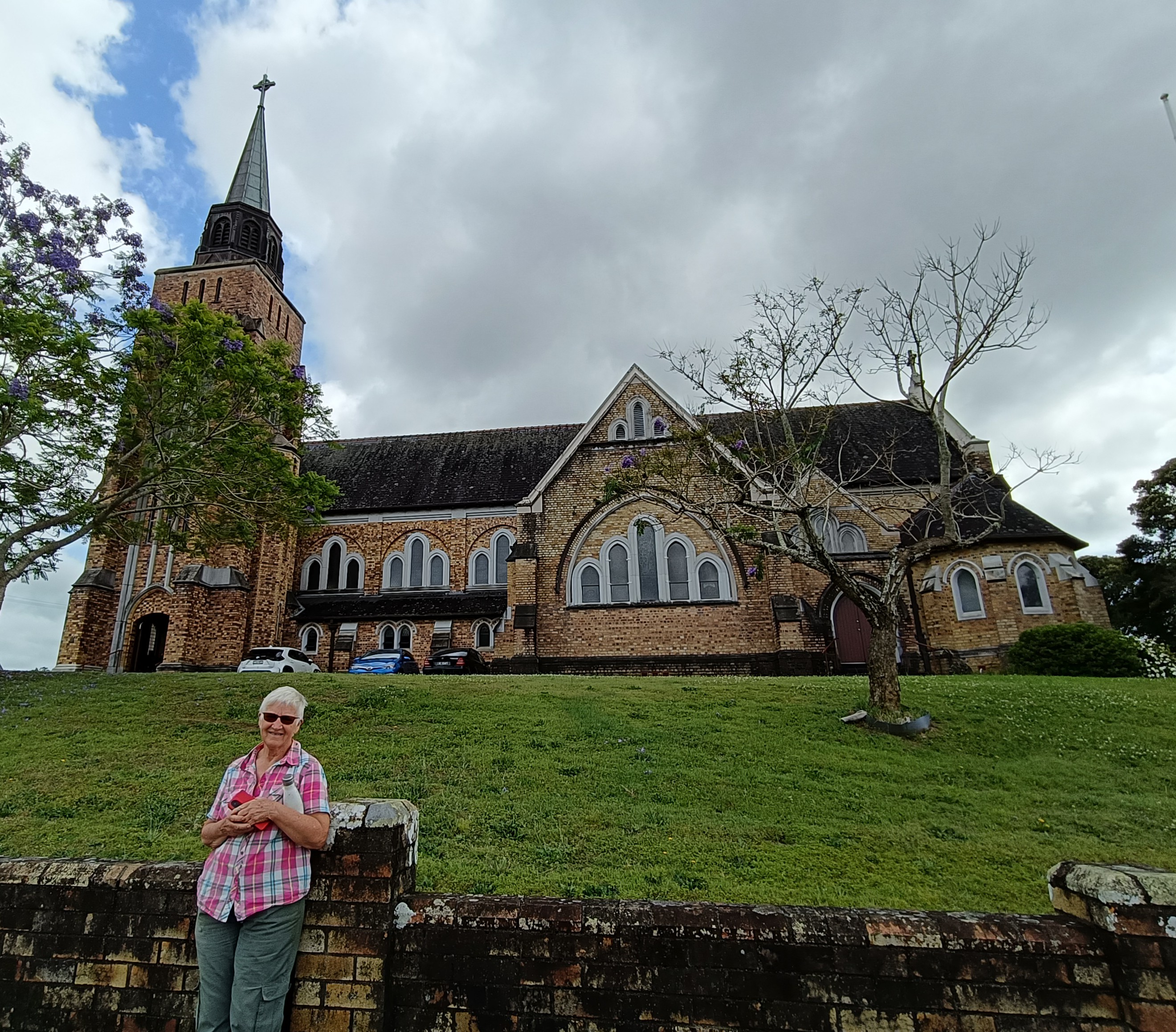
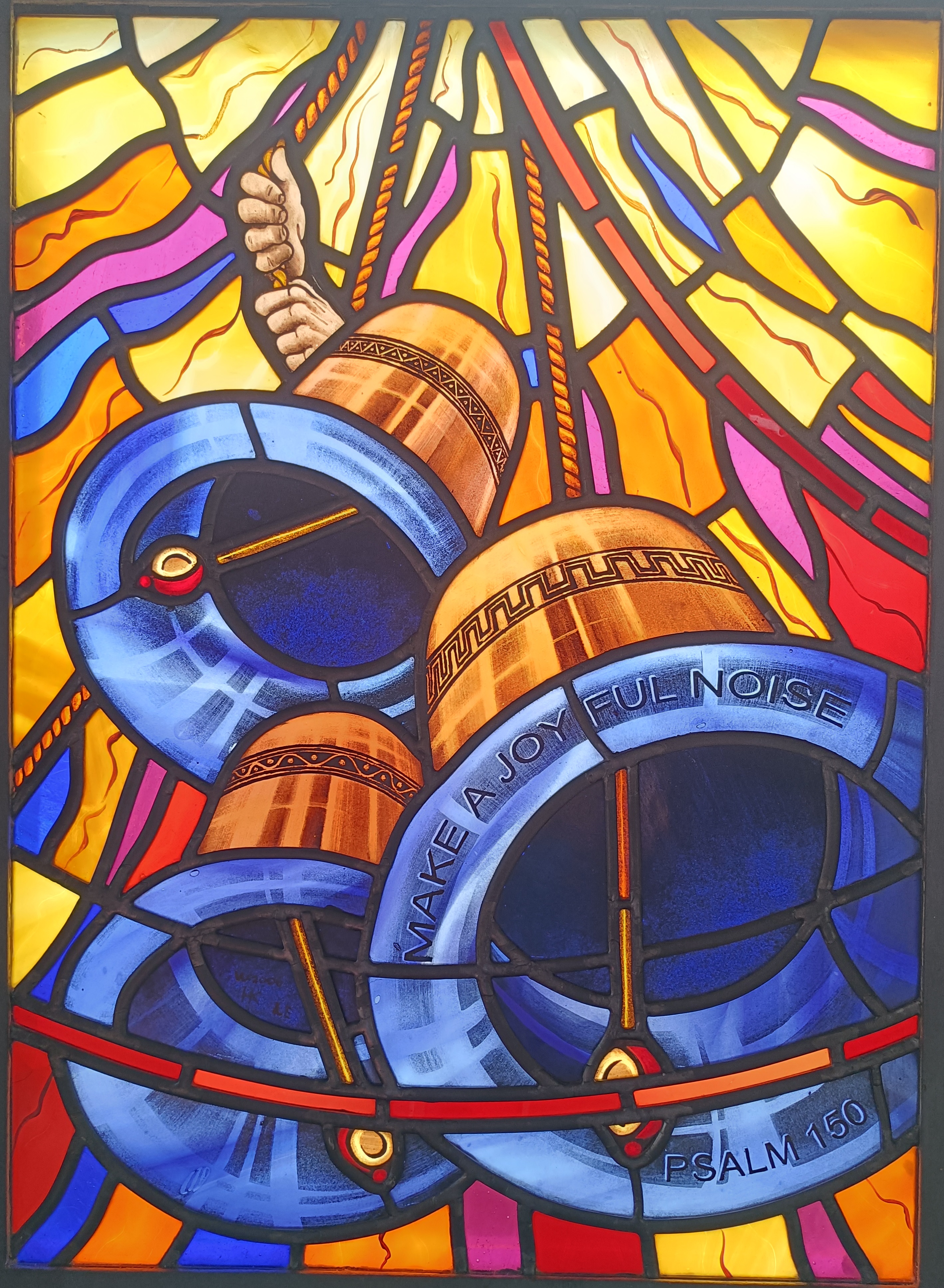
Bellringing, also known as campanology, is a unique form of music. I always enjoyed hearing the bells ringing from St Andrews Anglican Cathedral when I lived in Lismore. However, it wasn’t until I met Julia Stewart (at the Dunoon Hall craft group), that I discovered the sound is actually made by a group of people in the spire of the church (the belfry) pulling long heavy ropes attached to massive bells, in a series of mathematical patterns. Intrigued, I had to find out more…
Bellringing in Christian churches started in around 400 AD in Campania (Italy). However in the 16th century in England church bells were hung from a large wheel, enabling the bells to swing in a full circle and back again. This gave ringers control of their bell, allowing sets of bells to be rung in continuously changing patterns. Bells cannot rapidly duplicate a note as in other music. We have to wait for the bell to travel the full circle. This is “change-ringing”, as performed at St Andrews Lismore. The complex system of changes which makes a ‘peal’ was developed by an Englishman, Fabian Stedman, in 1657. Stedman was also a pioneer in Group Theory (Mathematics).
Julia Stewart is a member of the St Andrews Bellringers.
So, Julia, have you always been into music?
Music is in my soul, has been part of my life from childhood. As a child I learned the piano accordion. We only had radio and music was prime. Primary school choirs introduced me to classics – eg. Mozart. But more choirs alerted me to love the different sounds, moods and feelings music brings. And of course that anticipatory joy, the collective drawing in of breath, as a group prepares to venture forth.
How did you get into bellringing?
I was working in Sydney and had occasion to visit St Andrew’s Burwood church for another purpose and heard the ringing. It was Harvest Festival and they had a camera in the tower so it was enchanting to actually see and hear the action from downstairs. Stupidly I thought it would be contemplative! It certainly looked so. My daughter lived close by so we decided to give it a try. The teacher was incredibly painstaking and other tower members supportive. My developing skill and pleasure only increased. I am still a learner.
When did you first join the St Andrews Bellringers?
I started when I was well into my 50’s – near 30 years ago.
Was your first bell ringing experience scary?
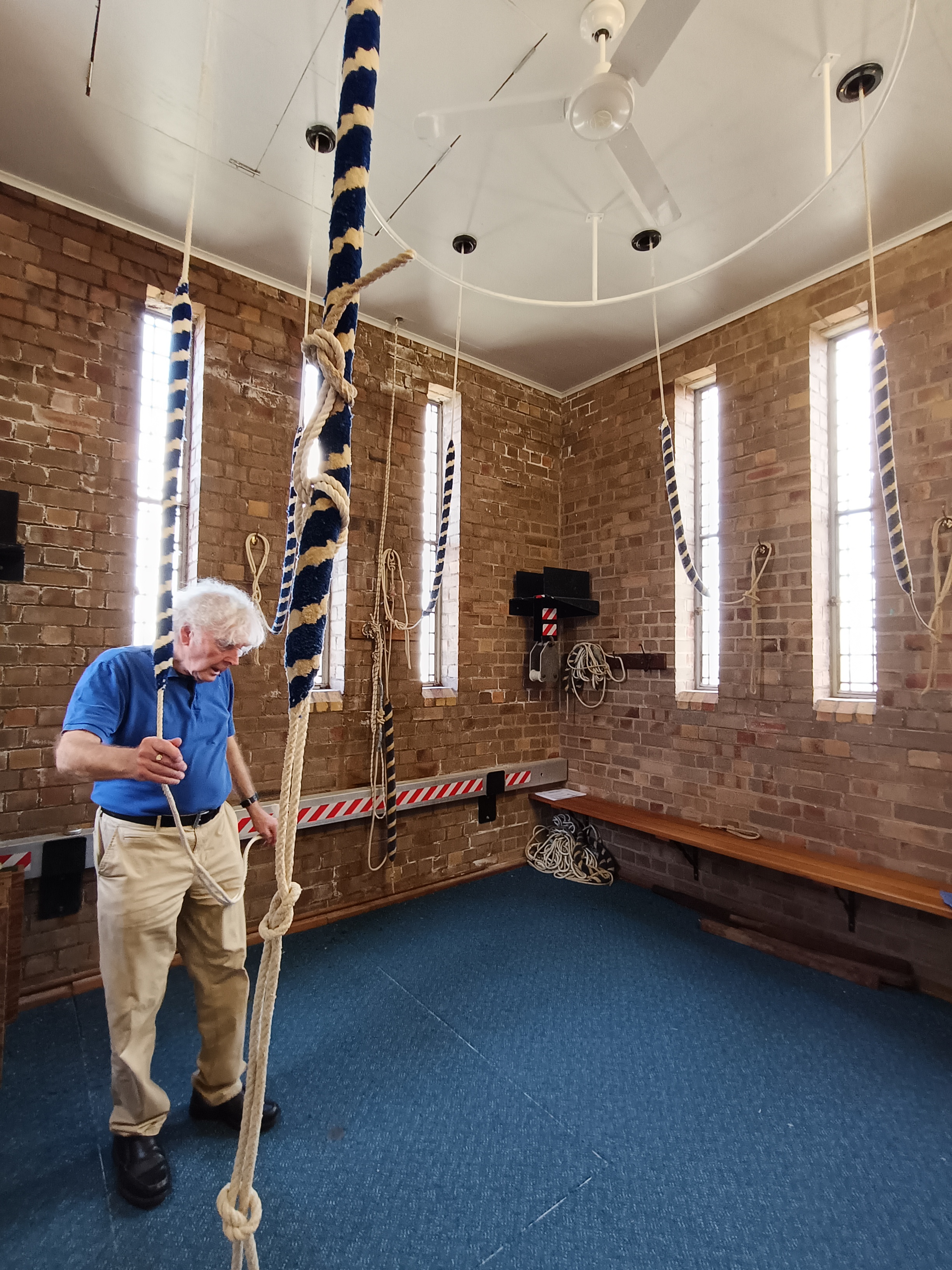
No question, I was so frightened once I got my hands on the rope … the weight, the rope ripping passed centimetres from the nose, yet you are expected to get a hold and look around at others!!! Seemed an impossible feat. I was the most nervous learner. Every bell has a different weight. Our heaviest bell is greater than half a tonne. Rope length varies as well. You may have heard of accidents (and fictional murders) in bell towers. Therefore, there are very strict boundaries as to who can teach in the tightly controlled environment. The but is … no one is ever just left to cope. Beginning ringers always have the teacher sharing the rope control. We are all covered by insurance too. You develop skills at your own pace.
What do you enjoy about it?
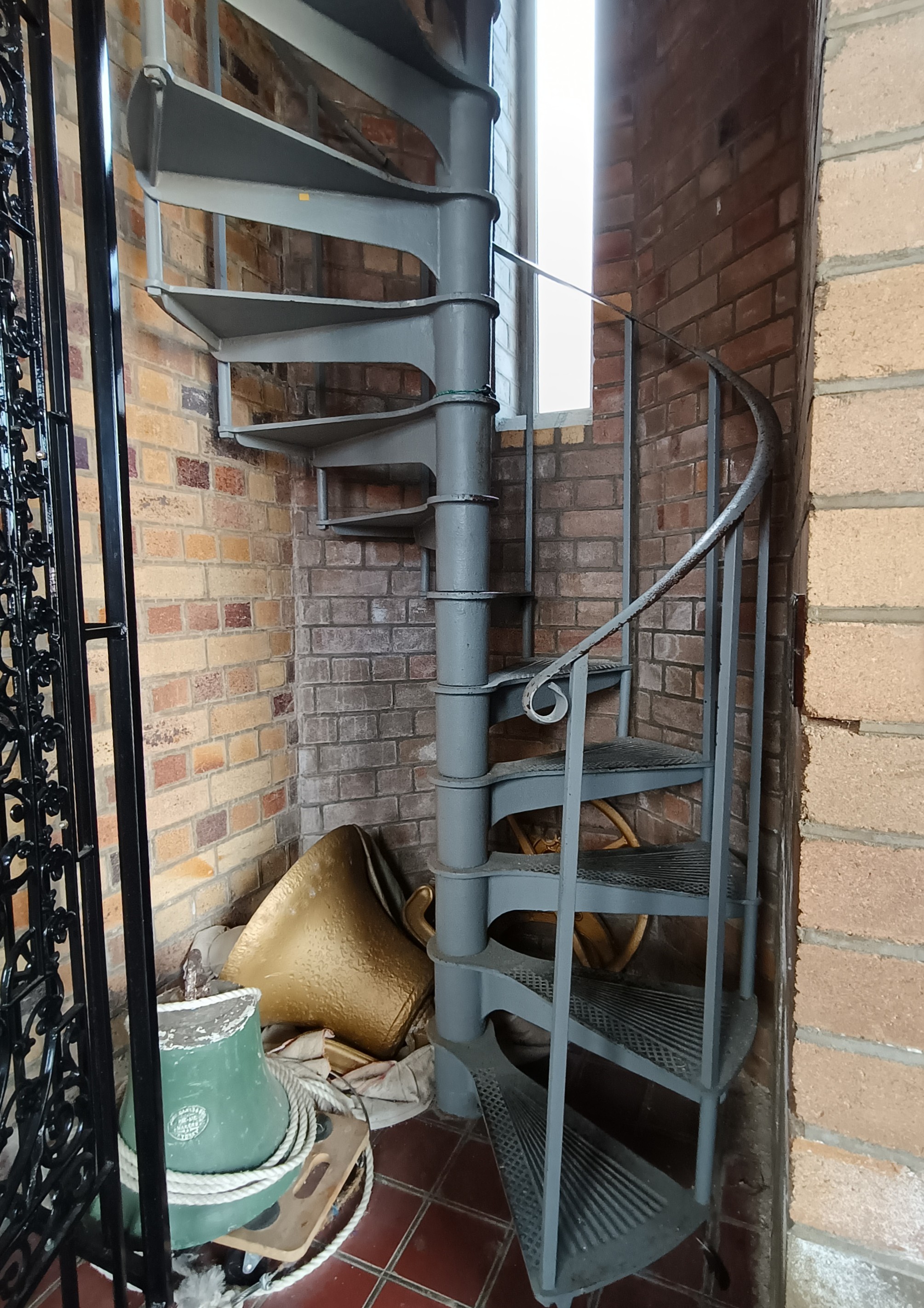
So much! We practice once a week and usually perform between church services on Sundays. You become friends with other ringers from all over the world who come from all walks of life, young and old, male and female, churchgoers or not. We all make mistakes, so we have to be tolerant. We have a conductor who is also ringing and must know when each bell should be rung in the sequence and helps us get things right. But the conductor also commands ‘Stand’ (stop ringing) if things just get too chaotic/clashy. The sequence has to be rung from memory. (No visual aids may be used). Our hands, ears and eyes are fully engaged. Ahh and the exercise. Why go to the gym to use weights? Towers have stairs – vertical tunnels. St John’s Cathedral, Brisbane has 102. So legs can get a workout as well.
Do you have to wear earplugs while bellringing?
No. You must be able to hear. All bell towers have a ceiling, so the sound is audible but not deafening.
Are the bells rung for specific events?
Yes. We are part of the wedding business, less so these days. We ring for funerals, church calendar days, Regal and special local events. We are accountable to the Lismore Council for when we are allowed to ring, after all there are people who groan hearing bells on Sunday mornings. Towers are equipped now to manage sound. Special letter drops are done for one-off occasions. The Lismore Anglican Cathedral is a garrison church so there are also Vice-regal visits which call for a special ring.
What are the different ringing patterns?
Far too many to list. New patterns, ‘methods’, of mathematical sequences are being composed all the time. But there are many very old traditional methods as well – Grandsire, Stedmans. Some get fun names – Shipping Forecast, Lismore minimus (composed locally). We can ring solemnly or joyously depending on the specific bells chosen.
How old do you have to be to start bellringing?
Some kids start early (reach the rope, then you can ring the bell), others still ring well into their 90’s. People drop in and out of ringing pending on life demands. You do not have to be a musician or a mathematician.
You’ve written a book about the connections between mathematics, bellringing and handcrafts. Can you tell us more about that?
I think I just like numbers! I am a ‘count-er’ from way back.
Women’s use of numbers was rarely recognised historically. Traditional arts often use complex mathematical concepts. My mother and father were perfect role models for me. Traditional guilds show mastery of materials. In knitting it is the recognition of the quality of different yarns, dimensions of yarn and needle size that impacts on what is produced for what purpose. I felt it was time to explore and celebrate the mathematics of traditional handicrafts.
And so to bellringing. I created a woven bookmark using a bell ringing pattern – a visual of sound. Now fine details often give way to ‘quick makes’, and complexity is missed. Bellringing keeps the fun of maths alive.
Are the St Andrews Bellringers looking for new members?
We have 8 bells (metro towers can have 12-16 bells) and it is like a full choir when all bells are rung – really satisfying for everyone listeners and ringers alike. We all have another life so it is good to have more ringers so we can take time off too. New ringers are always welcome. You ring to your skill level and availability. All bell towers are different – that is part of the fun and skills expand if visiting other towers Nationally or Internationally. Lismore is very firmly on the international campanologist’s map. Tower visitors are welcome as negotiated.
More from Peter Corlis, the steeple keeper of St Andrews (bellringer for 10 years):
In some churches, bells swing in a similar way to those at St Andrews, but ring randomly. These are the bells you might hear on a Sunday morning on a holiday in mainland Europe. In other churches the bells are stationary and are rung by being struck by hammers either by hand, or by a mechanised process. These bells can play chords and tunes. St Carthages Cathedral in Lismore has these types of bells.
The St Andrews Bells are change-ringing bells. Each of the 8 bells at St Andrews is tuned to a note on the B flat major scale and is attached to a rope that is pulled by a person. The bells are rung one at a time, in “sequences”, not together in chords. The patterns in which the bells are rung are called methods. In each line of a method (called a change) the order (or sequence) of bells changes. Eg. For 3 bells 1, 2 & 3, there are 6 different possible changes or sequences: 123, 213, 231, 321, 312 & 132. For 7 bells the number of sequences increase to 5040 (= 7! or 7 x 6 x 5 x 4 x 3 x 2 x 1 for those mathematically inclined). This could be rung in an 8-bell tower like St. Andrews where the “tenor” (the largest & deepest sounding bell) acts as a “cover” bell punctuating the end of each line of changes. When ringers ring 5040 changes in one go, it is called a “peal”. It takes 3 hours+ of continuous ringing to perform a peal.
For events such as funerals, the bells can be fitted with muffles to make them softer and a minor scale is normally chosen. The smallest bell is the “treble”. The bells in between the tenor and the treble do not have names, only numbers. For funerals, the tenor bell is normally rung (tolled) for the number of years the person has lived.
A minimum of 3 ringers is needed to perform. But the more the merrier – subs sitting on the sidelines like in team sport are welcome so people can have breaks.
It takes a few weeks to learn the techniques and build up stamina. Teaching new people is incorporated into the weekly practices (and the experienced people get a well-earned break meanwhile!)
Have you become fitter?
Physically- maybe not greatly, but I have probably become mentally fitter because the ability to maintain concentration in the current digital world is something we are all losing. You must be fully mentally and physically engaged to do change-bellringing. It is very meditative. You really get into it in the long methods. At the end you do feel well stretched with improved posture and as if you have had a good moderate workout.
Article for the Dunoon Gazette, published December 2024.
The Upstarts
Dunoon Music Festival 2024 review. Text and photos by Sarah Brehaut
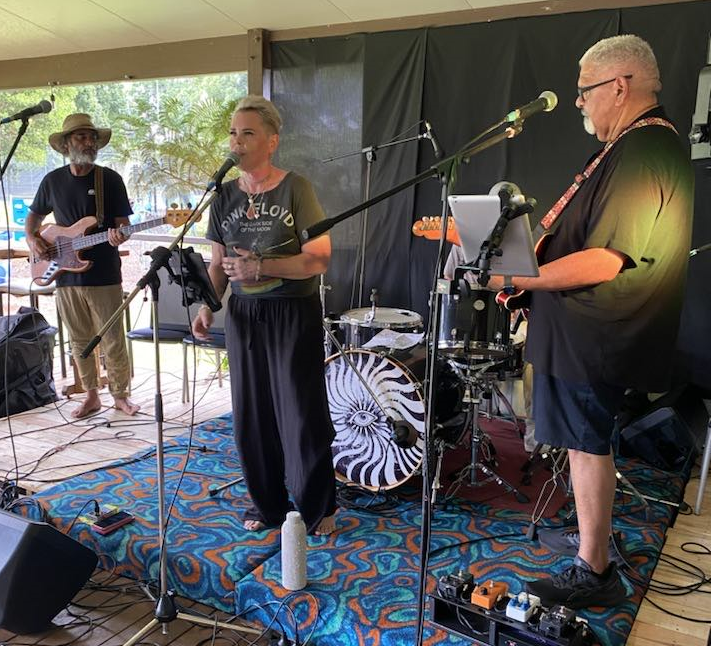
On Saturday 9th November the Dunoon Sports Club was pleased to host the Dunoon Music Festival, proudly sponsored by Planet Music. With seven bands lined up for the day, a sound engineer, volunteers galore, food vans scattered out the back and Anna’s Greek Kitchen fully stocked for the day what could possibly have gone wrong?
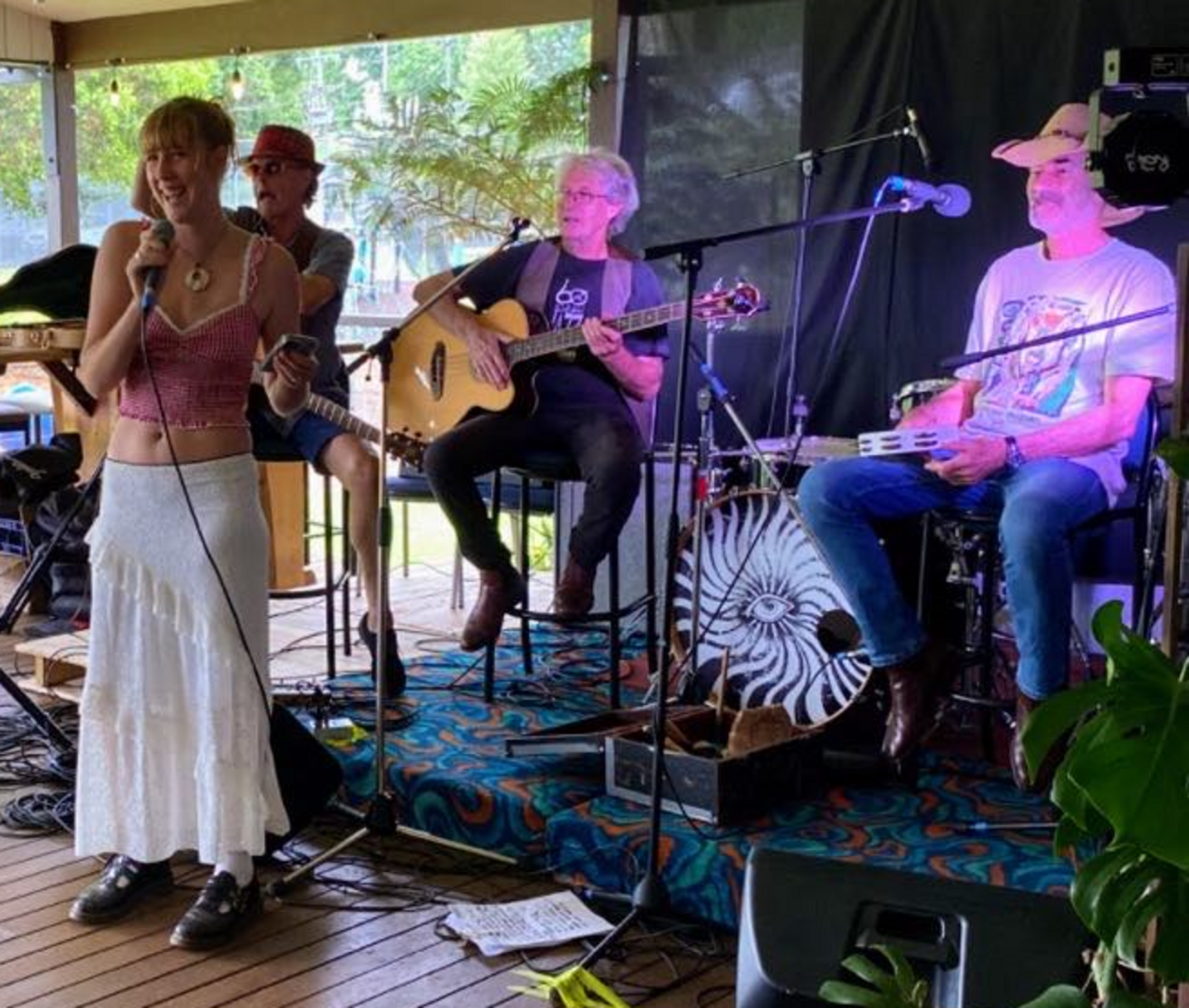
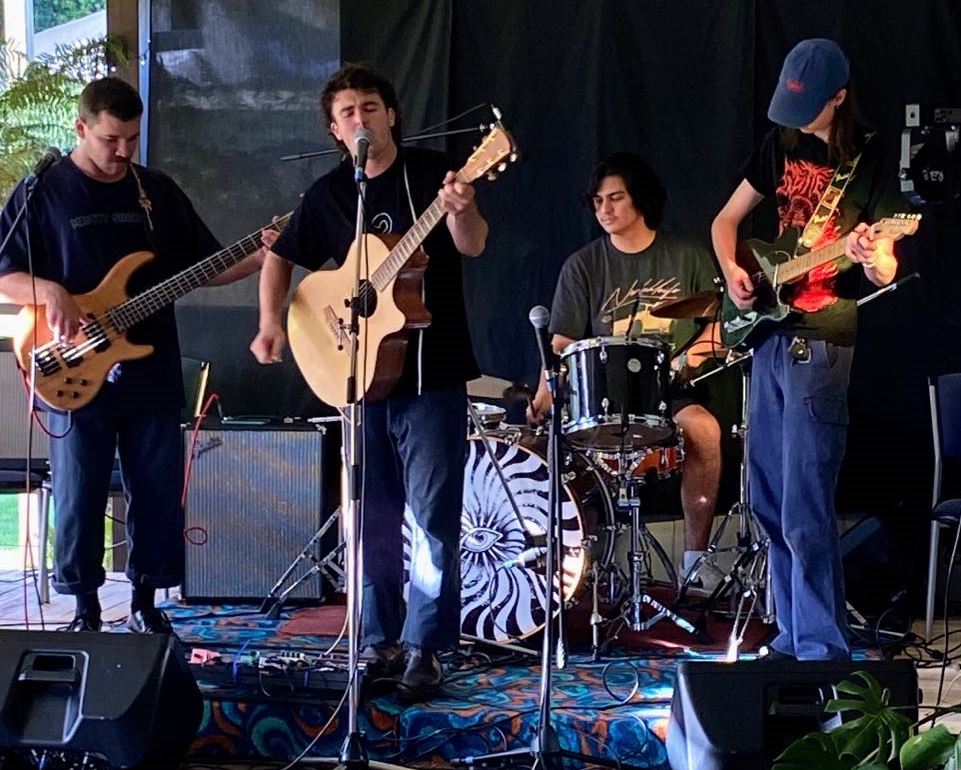
An acknowledgement of country was read by Rosie Brehaut, then the fabulous Loading Zone played classic 90’s rock tunes. Next were The Upstarts, a four-piece acoustic based group featuring strong harmonies. They covered songs from the 60’s through to the 80’s. They were awesome!
Levi Maxwell (an Alstonville based folk singer/songwriter) then took the stage, backed with a full band. He recently toured Australia, playing gigs all the way across the Nullarbor to Perth. His latest single Windshield is a fun folk-rock tune which is helping him garner a loving fanbase in the Northern Rivers.
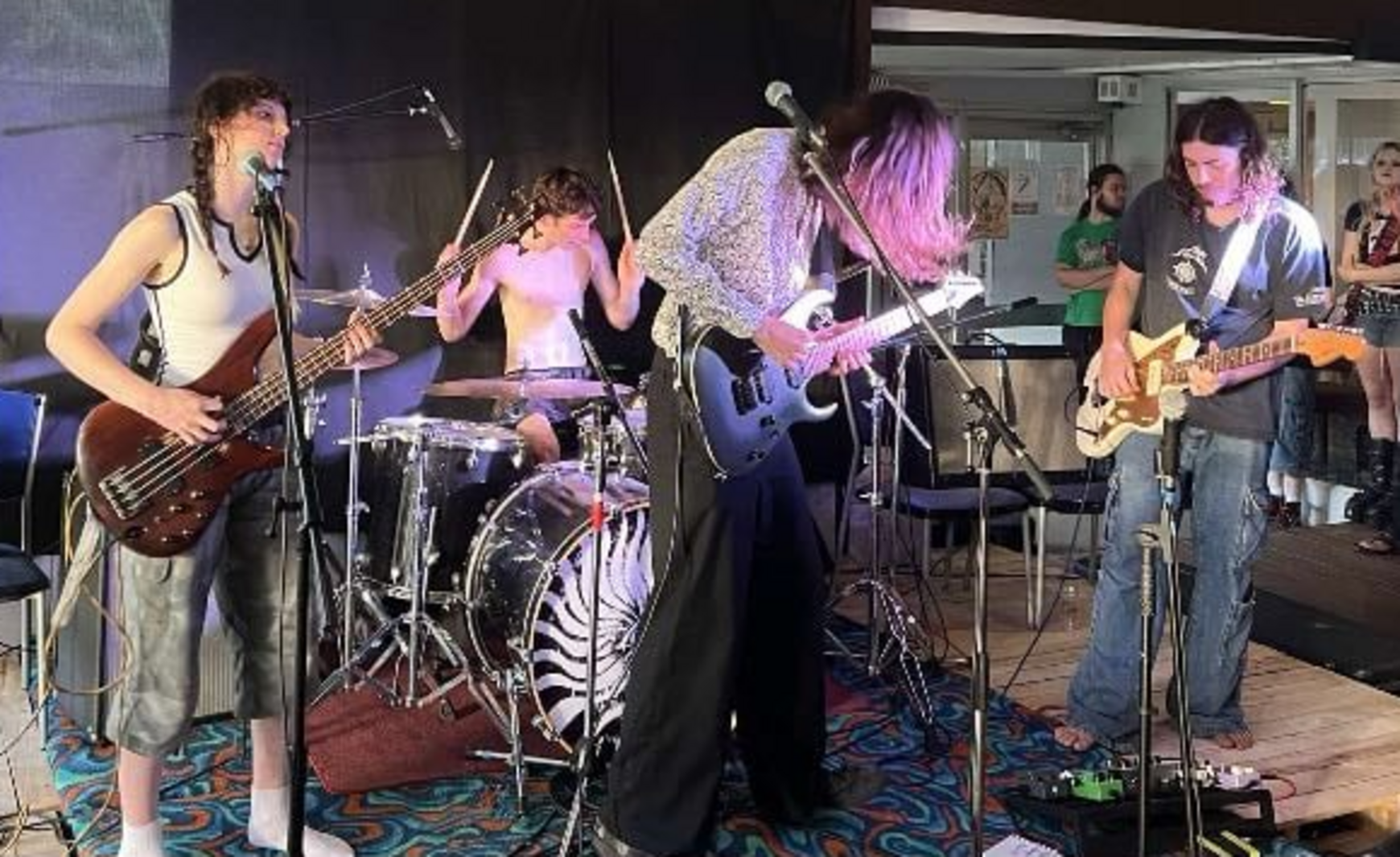
Mulch were next. The sun was setting, the lighting was perfect, and they went off! This young band was formed when the founding member discovered the others at a year 12 music performance. They drew in a good crowd, pumping out heavy rock. The lead singer’s guitar thrashing and head banging at the same time thrilled the audience! They smashed it.
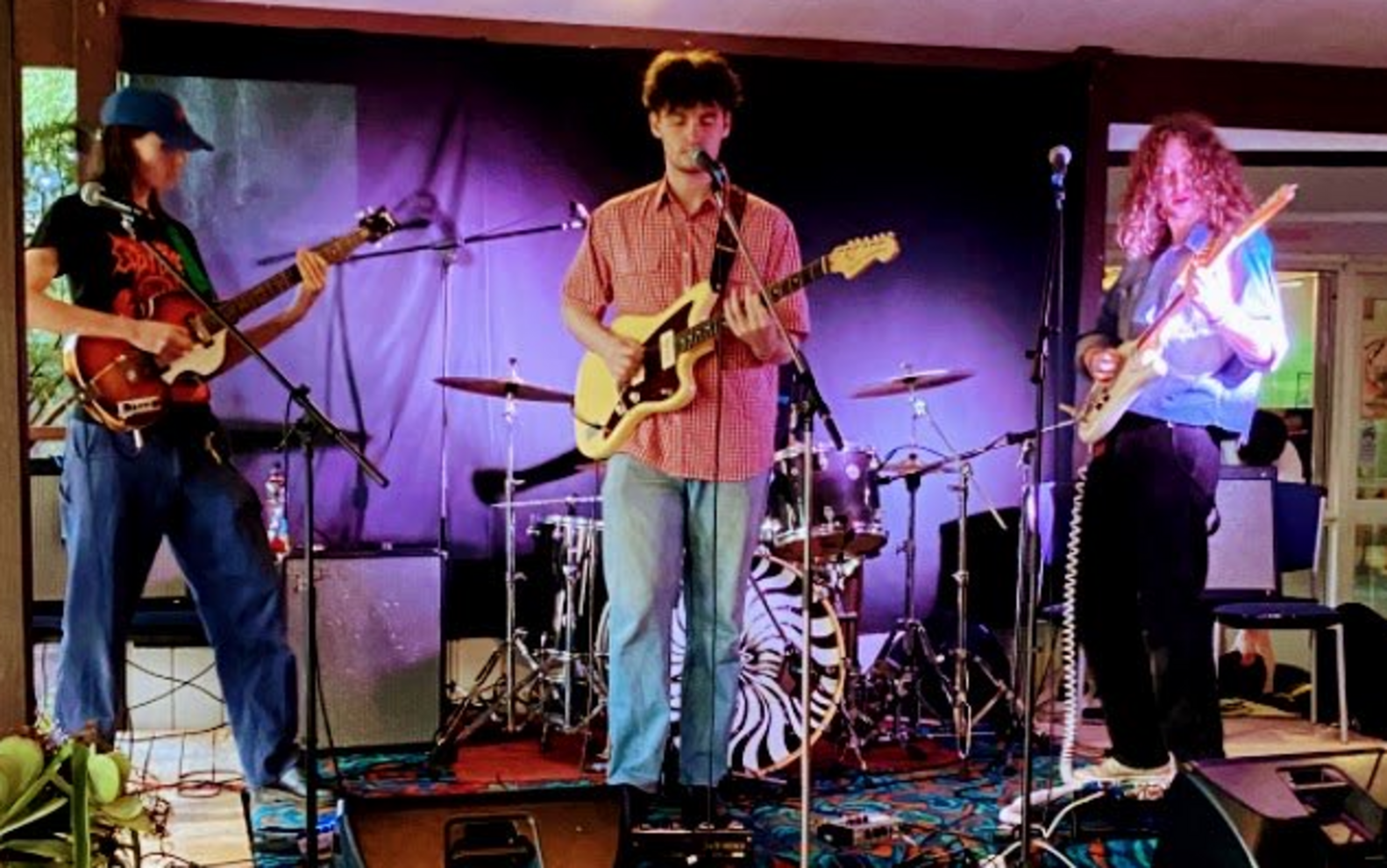
Following were Lucy’s House, a new psychedelic rock band from Lismore who merge driving grooves with 60’s style pop and modern psychedelic. They have an experimental edge which makes them unique and endlessly entertaining.
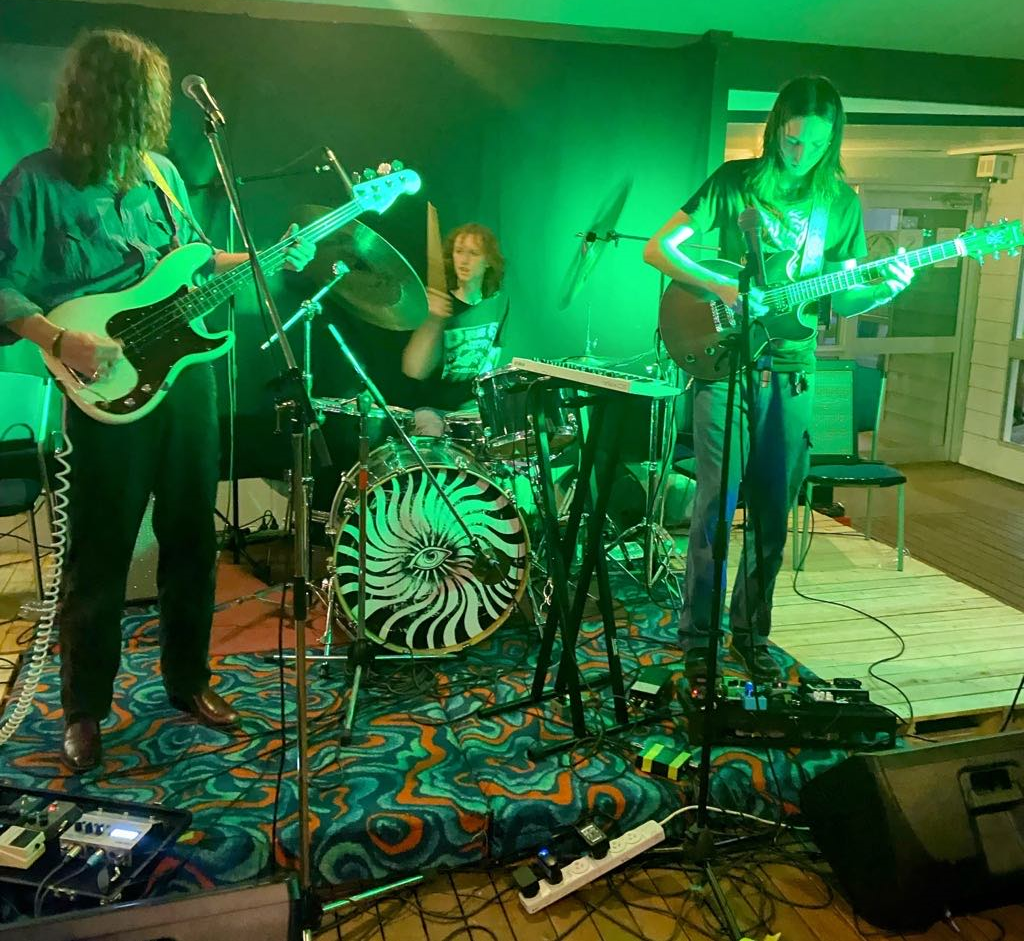
Next were Cerberus, a psychedelic classic rock/heavy metal three piece from Lismore taking influence from Black Sabbath and Led Zeppelin. They wove heavy bluesy riffs with soaring vocals and dreamy tones.
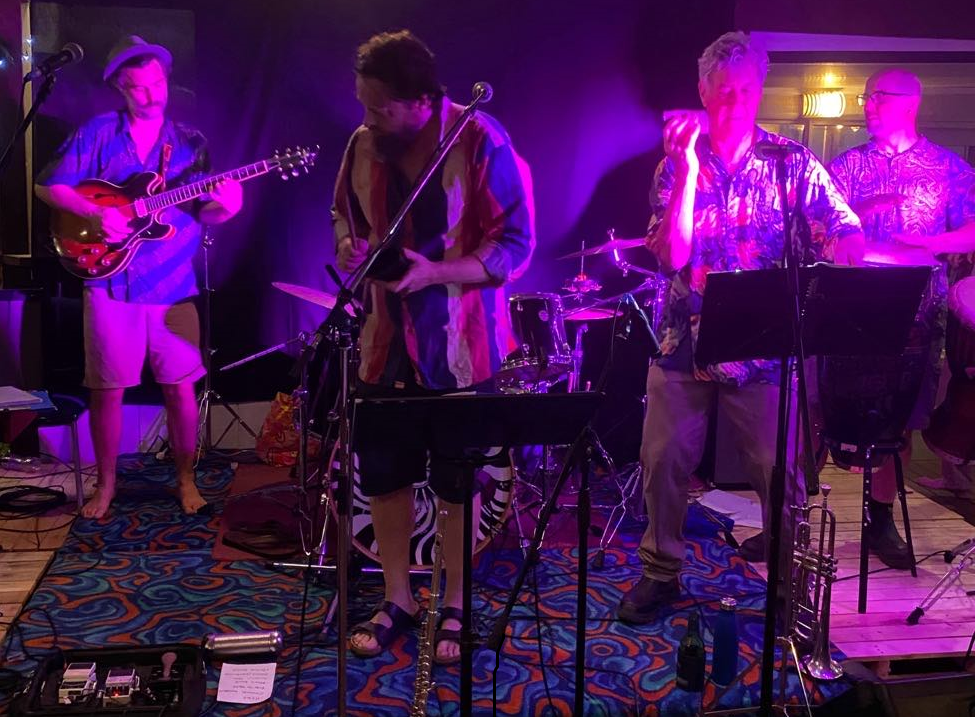
Finally Timbuktu played: eight men squeezed onto the stage, and the dance floor was full. They performed original songs and arrangements of vintage 60’s/70’s tunes from the golden age of African highlife, plus Afrobeat and Ethiofunk.
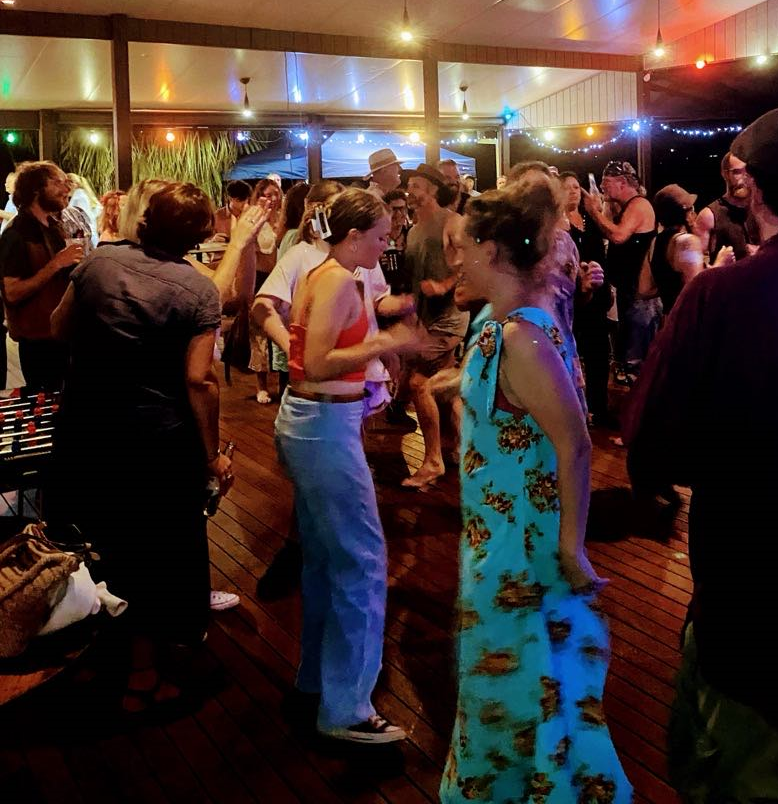
The bar shut at 11pm and the day was a huge success. A very special thank you to everyone involved especially Solomon Jones, without you we would not have been able to put on this event.
Article for The Dunoon Gazette, published October 2024.
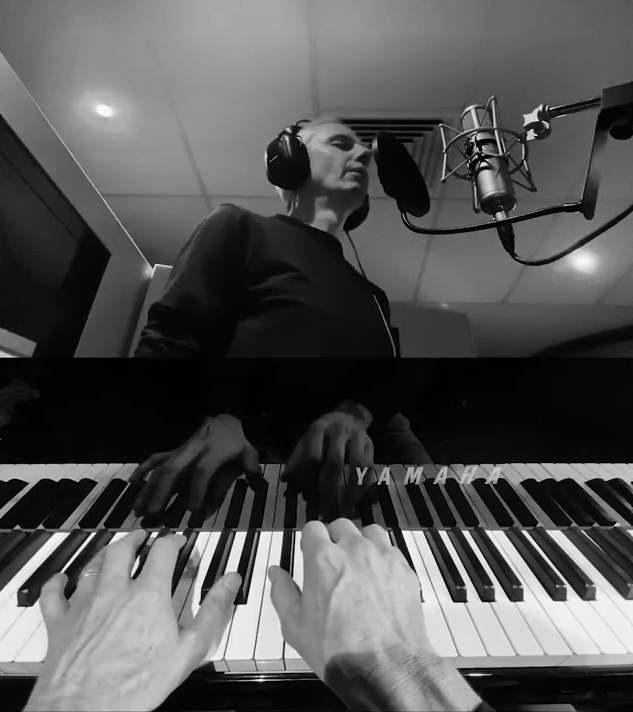
Still from @mattsound22 YouTube video “Trouble” – Matt Hill
Northern Rivers (NSW Australia) muso interview: Matt Hill. Text by J. Lowe.
Dr Matt Hill (PhD, Music technology and composition) was a Dunoon identity for many years: a fixture of the Dunoon Football Club as a player and committee member, a member of the Dunoon Primary P&C and a music teacher at his home in James Street. He wrote a song about the Dunoon tornado which ripped through the village in 2007. He moved to the Tweed region a few years ago, but still performs in our area, most recently at Planet Music, The Levee Bar, and the Dunoon Sports Club.
He is a composer, songwriter, and multi-instrumentalist. He was a board member of the Northern Rivers Conservatorium for many years and is a presenter on The Sound Lounge, on ABC North Coast radio. He is a senior lecturer at Southern Cross University where he teaches musicianship, music technology, screen sound and industry/career development. He has released eleven recorded works (available to hear on via his website, https://matthillmusic.info), including solo albums, albums with amphibian, sound design for a Norpa production, a soundscape for a Lismore Regional Gallery exhibition, and a film soundtrack.
Musicophilia caught up with Matt just after he walked the South-West Coast Path in Cornwall (England) with his wife Lisa.
Where are you and what time is it?
St Ives, Cornwall, 11am.
Should we expect some new music when you return, with a wild Cornish flavour?
I love the idea of music with a wild Cornish flavour and I hope I can deliver on that front!
You’ve lived and travelled in various places in the world. You made one of our favourite albums, Warm Keep Warm, when you lived in Dunoon. Do you know where your inspiration to make music comes from, or is it a mystery?
My inspiration comes from sitting down each day and practising. I’m very inspired by other musicians and I really enjoy playing and collaborating with them. The students I teach can also be very inspiring. Fundamentally, practising music as often as possible makes inspiration happen. I love making music, so it’s no chore.
And when inspiration comes, which comes first, the music, the words, or something else?
Generally the music comes first – a piano or guitar part, or a chord or little melody. Then, if I’m writing something with words, it’s a long process to turn a melody into a song with words that can actually be sung and make a glimmer of sense!
When did your love affair with music begin? I can’t remember a time when I wasn’t in love with music. I remember listening to Monster Mash when I was really young – I loved that song! Dad and my sisters always played the piano. There was a lot of music in our house near Canberra.
When did you first perform music in public, and were you scared?
The first time I performed publicly was at the Caiguna Roadhouse, on the Nullabor Plain, where I worked when I left school. I was seventeen. They had this motorbike gymkhana people came to from far and wide. There was a singer that night playing classic country songs. A few of the staff including me got up and played too. I did a very bad version of The Dead Heart (Midnight Oil). I wasn’t scared because I had been sampling the wares of the bar beforehand.
Was that actually the first time?
Well I played a bit with friends and family, but you see I didn’t do music at school. I learned classical piano, so my only “performances” were for one examiner when I did my AMEB (Australian Music Examination Board) exams. I was terrified doing those exams! I did play in a band at school, but we just jammed and never performed publicly.
And how did you come to work at the Caiguna Roadhouse?
My brother had worked there so we had the connection. It was a great place to work – in the middle of nowhere. I was looking for a job to save up for travelling. I saved all my earnings because there was nothing to buy. I worked about 6 days a week for 10-12 hours, and then in my breaks I’d play guitar or wander off into the bush. It was fantastic! I worked there again a few times again in the holidays while I was at uni.
Your first albums were recorded with the band amphibian. They were instrumental and included samples of frog calls and other nature sounds. You used to busk in Byron Bay with amphibian. How did that go?
That was when that band was first coming together. We first performed as buskers. It was a five piece band then including a conga player and synth player. I played keys, and there was also a drummer (Rob Walsh) and a guitarist (Barry Hill). We set up just down from the Beach Hotel (towards the roundabout). It was great fun – we played whatever we wanted to. People would stop and get into it. Didn’t make a lot of money but it was enjoyable. It was free to busk in Byron then, and there were no council regulations. We had a battery powered amp, and Rob would set up a small drumkit. That was in around 1999. I did my music degree at Southern Cross University (Lismore) from 1995 – 1997. I majored in guitar and and was taught by Jim Kelly. I moved to Melbourne afterwards but came back to work on amphibian with Barry and Rob who were living in Byron at the time.
You also signed a Japanese recording contract with amphibian and toured in Australia and internationally. How was that?
It was great! amphibian was our sole focus for a couple of years. We really worked at it. We rehearsed every day. We recorded a couple of albums. Rob went to Japan to work and study after we’d finished our intense playing time together. He made industry contacts and they really liked our first album, and released it over there. We played a lot in Melbourne and Sydney, and then went to the UK. We got an Australia Council grant to work with a dance company in Manchester on a project that was part of a cultural festival associated with the Commonwealth Games in around 2002. We played in Manchester and at a festival called “The Big Chill”. It was heaps of fun.
On your 2018 album Stars and the Moon and Satellites, you started to sing. Before that most of your music was instrumental, with some vocals supplied by others. Why did you decide to start singing? How is your sound evolving?
Actually before amphibian I did sing in other bands. So I was returning to something I’d done before. I’ve become more and more drawn to singing. It’s something I really enjoy practising now. I think, just moving the breath around – I feel better. When you sing for an hour you can’t help but feel good afterwards. With a lot of the instrumental music I’ve done, I felt there was something missing in some of the tracks and I wanted that foreground element that vocals bring. I’ve worked with a lot of different singers, and I love that, but I’ve found that, even though I’m not the world’s best singer, the sound I’m after now is actually the sound of my own voice.
You have recorded music with your brother Barry and your daughter Gabriella. What’s it like to work with family?
With Barry it’s very comfortable because I have played music with him since we were kids. It’s been wonderful to record with Gabriella and I have played some gigs and made music videos with her. She’s skyrocketing in her abilities now. She is studying at the Sydney Conservatorium – in her 3rd year of the jazz performance degree. I also enjoy jamming with my other daughter Cassandra who is a talented musician.
How does someone manage to make a living from music, as you do? What helped you on your journey to where you are now in music?
Music teaching is the way I’ve been able to make a living and it has funded my music practice. I think about this a lot in my role at the uni. To have a career in music you have to be skilled in a whole range of areas (unless you’re one of the very lucky few who has a hit and breaks through). However there are a large number of phenomenal musicians and performers in Australia who are who aren’t making a living from music. This is a real shame for Australia. It would be great if our artists could be supported as they are in other countries.
I find the academic side of music interesting. However tertiary education in Australia is in a really tough place right now, particularly in the creative arts. Music degrees across the country are struggling to get numbers. It’s great to work with students at university who have decided to make music their career, although it is tough for them.
However, I think if you are passionate about music you will find a way to make it work.
There are a lot of music related areas to work in: admin, event management, film music writing etc. Plus the social media landscape has opened other opportunities.
What are you heading towards on your musical horizon, or will you (and us) find out along the way?
I’ve had 4 weeks off practising while I’ve been travelling, which has been strange because that has never happened before. So soon I’ll just sit down and start practising again and find out what emerges as I go along. I’m keen to record something while I’m on this side of the world, but I’m not 100% sure what it will be yet. I’m keen to collaborate with new people. I’m in an open space right now.
Does your physical environment inspire you?
Yes, I think it really does. The Northern Rivers region is very inspiring on an environmental level because we have the ocean, the beautiful weather and forests and National Parks, but also there is an incredible music scene in our region. There’s a great scene near where I live now in Murwillumbah, and there’s stuff going on in Kingscliff. It feels really connected to what’s happening in Byron and Brunswick Heads and Lismore. Our whole area has a great energy for creativity. I’m also curious to explore the current scene over here, in London, Berlin and Amsterdam on the rest of our trip.
So it’s that combination of the natural environment and the people who are making interesting music in those environments that is inspiring.
I think per capita we have the most musos in this region, in Australia. Is that right?
Yes.
Is there a connection between Zen Buddhism, music, football and chickens we need to know about?
There is definitely a connection, but you will have to listen to the latest two amphibian albums to really get it!
Thankyou kindly Matt, for sharing your story with us. We will be following the next chapters with great interest.
Article for The Dunoon Gazette, published June 2024.
Graphic from the cover of Musicophilia by Oliver Sacks.Text by J. Lowe
“There are rare humans who… may lack the neural apparatus for appreciating tones or melodies. But for virtually all of us, music has great power, whether or not we seek it out or think of ourselves as particularly ‘musical’. This propensity to music – this ‘musicophilia’- shows itself in infancy, is manifest and central in every culture, and probably goes back to the very beginnings of our species. … it lies so deep in human nature that one is tempted to think of it as innate, much as E.O. Wilson regards ‘biophilia’, our feeling for living things.” (from Musicophilia, a book by legendary neurologist Oliver Sacks, Picador, 2008)
“Patients who are diagnosed with ‘musicophilia’ report a sudden, abnormal craving for music…” (from www.musicpsychology.co.uk)
Maybe you don’t “suffer” from musicophilia. Maybe when you were an open, vulnerable child you were told you couldn’t sing or play music. Maybe you think music can only be made by famous or “talented” people. However, as Mr Sacks says, music lies deep in human nature, and that is why one doesn’t have to be an “expert” to talk about, play and make music. Music is all around and within us, and rhythm exists in our speech, breathing, and heartbeat.
There will be various authors of this column. It’s strange to write about music without hearing any, however we will be attempting to enable the alchemy of music to flow through us, to be transmitted to you in another form. Please transmit your experiences, comments etc., back to us via our blog: https://www.greenbazaarau.com
There will be interviews with local musicophiles, gig reviews and other random stuff we haven’t thought of yet.
What we’re…
Reading: The Silver River, by Midnight Oil guitarist/songwriter Jim Moginie, 2024.
Listening to (local): Luke Vassella – ‘By The River’ song series 2024, youtube, and Liminal – @liminaltheband on instagram, or google Liminal Lismore.
Looking forward to: The Dirty Three @ The Green Room, Byron Bay on 29June, and The Lismore Symphony Orchestra, performing “Anniversary 20”, 27 – 28 July, St. Mary’s Church, Norton Street, Ballina.
 . Article details below.* (This particular article is worth reading).